


ENVIRONMENT AND ENERGY
Theoretically Assisted Bio-HLED Optimization
Principal Investigator:
Prof. Dr. Rubén D. Costa
Local Project ID:
pn25bu
HPC Platform used:
SuperMUC-NG PH1-CPU and PH2-GPU at LRZ
Date published:
Abstract/Summery of the Project
The EU promotes research in “Green Photonics,” aiming to develop efficient and eco-friendly technologies for energy, lighting, and electronics, aligned with the 2030 target of a 55% cut in greenhouse gas emissions. This drives the search for better illumination systems. White inorganic LEDs, candidates to replace incandescent bulbs and harmful fluorescents, rely on toxic and rare-earth materials, raising sustainability concerns. As an alternative, we propose the bio-hybrid LED (Bio-HLED), which uses fluorescent proteins embedded in polymers. BLOP (theoretically assisted Bio-hLed OPtimization) focused on characterizing its structure and understanding heat-induced degradation to improve stability and performance.
What was the Challenge?
To push forward the Bio-HLED as a viable technology we need to characterize the structure of the protein-polymer matrix and the nature of their interactions, and to elucidate the heat induced degradation mechanisms under device operating conditions at the molecular level, providing key information that cannot be experimentally obtained. For this, we have first to understand the reasons why the protein keeps its stability and function in a non-physiological environment is instrumental for the development and optimization of the Bio-HLED. In this respect, unraveling the way proteins are embedded in the polymer matrix is the first step toward understanding how the protein native structure is kept. The analysis of the stabilizing interactions between the protein and the polymeric matrix will provide the necessary information to optimize the matrix composition and prevent protein denaturation. Furthermore, proteins keep their structure and function under mild temperature conditions, which limits its use in lighting applications. Under device operating conditions, the fluorescent proteins used in the Bio-HLED can undergo denaturating processes caused by heat. Understanding the mechanism of heat dissipation in these systems will provide information to design strategies maximizing dissipation and therefore enhancing the thermal stability of the Bio-HLED, allowing a large life cycle and enhancing the range of applications of this technology.
Why was supercomputing power required?
The analysis of the structure and the characterization of the stabilizing interactions between the protein and the polymer matrix will provide the necessary information to optimize the matrix composition and prevent protein denaturation. For the investigation of the protein-polymer matrix structure we need to use molecular dynamics (MD) and/or hybrid quantum mechanics/molecular mechanics/molecular dynamics (QM/MM/MD) methods. Due to the size of the systems investigated here and the theoretical methods employed, only the use of massive parallel computing environments allows to carry out the simulations efficiently.
What are the findings/knowledge gained?
Using a combined approach that uses ab initio methods (density functional theory (DFT) and time-dependent density functional theory (TDDFT)) molecular dynamics (MD) and hybrid quantum mechanics/molecular mechanics (QM/MM) approaches, we demonstrate that the systems selected for bio-lighting applications are robust under the expected operating conditions, not showing any drastic change in their structure and optical features. Furthermore, the insights obtained from the simulations allowed us to design new materials with improved performance. See Figure 1.
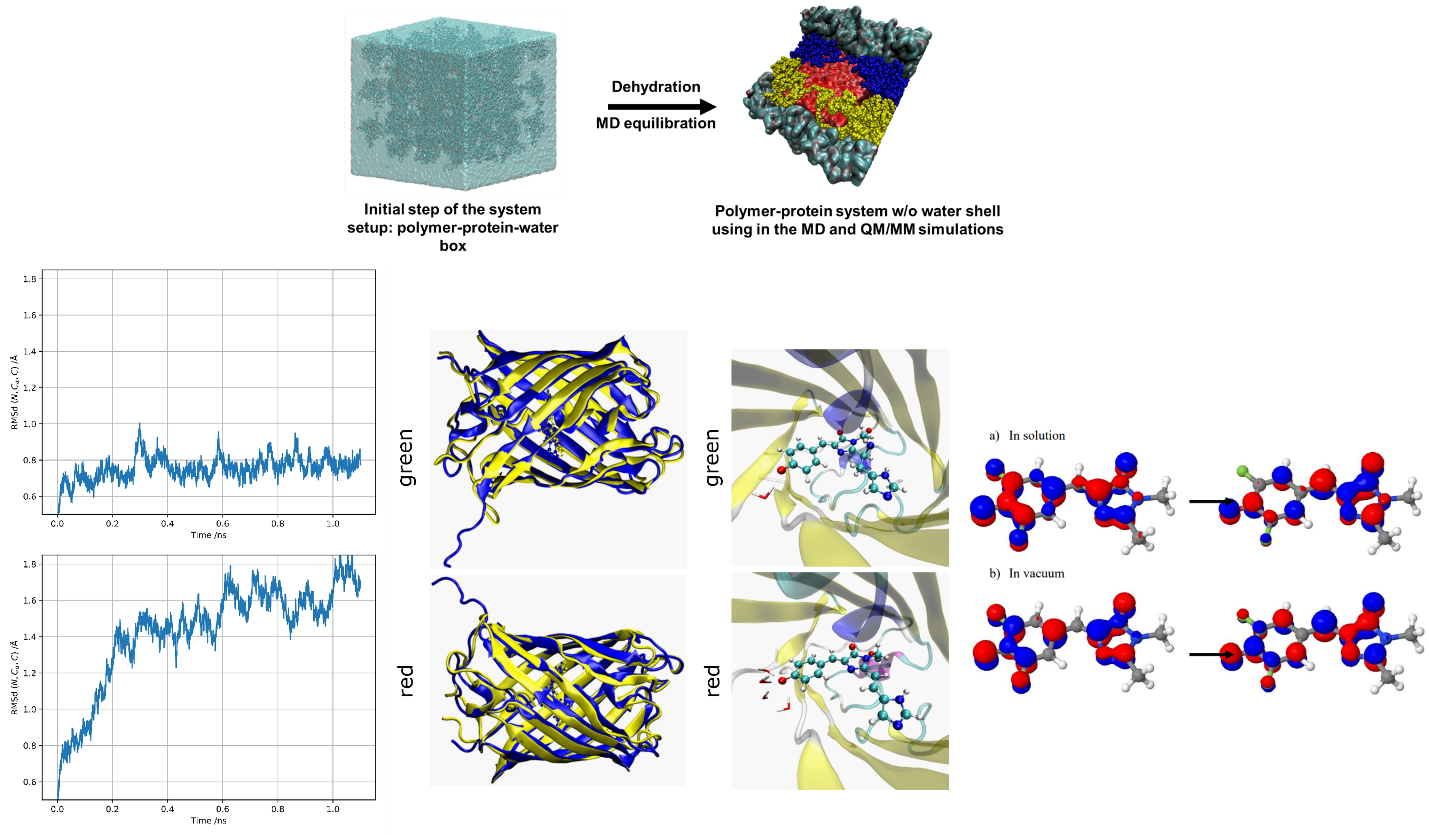
Figure 1. BLOP made possible the detailed study of molecular structures expected under device operating conditions for different emissive molecules.
Who did/will benefit from the insights gained? In what way?
The knowledge gained by BLOP has provided benefits to the scientific community involved in the development of optoelectronics in general and bio-lighting in particular, as new technologies can be implemented and pushed forward. In the mid and long-term, the European Union (EU) governments will benefit, as they are encouraging research towards the so called “Green Photonics”, the design and fabrication of efficient, low-cost, and environmentally friendly devices for energy production, lighting, and electronics.1
Publications from this project
(1) Grümbel, S.; Hasler, M.; Ferrara, S.; Patrian, M.; Banda-Vázquez, J. A.; Coto, P. B.; Fuenzalida Werner, J. P.; Costa, R. D. Simple Encoded Circularly Polarized Protein Lighting. Advanced Optical Materials 12, 2400106 (2024). https://doi.org/10.1002/adom.202400106
(2) Willeit, S.; Mauz, A.; Gutiérrez-Armayor, D.; Arbash, J.; Banda-Vázquez, J. A.; Marti, S.; Coto, P. B.; Costa, R. D. Ancestral Protein-Based Lighting. Advanced Materials 2420303 (2025). https://doi.org/10.1002/adma.202420303
Additional references
1. 2030 climate targets - European Commission. https://climate.ec.europa.eu/eu-action/climate-strategies-targets/2030-climate-targets_en.