LATEST RESEARCH RESULTS

Find out about the latest simulation projects run on the GCS supercomputers. For a complete overview of research projects, sorted by scientific fields, please choose from the list in the right column.

Materials Science and Chemistry
Principal Investigator: Dr. Qingguang Xie , Forschungszentrum Jülich GmbH, IET-2 Helmholtz Institute Erlangen-Nürnberg for Renewable Energy, Germany

HPC Platform used: JUWELS Cluster at JSC

Local Project ID: Bubble

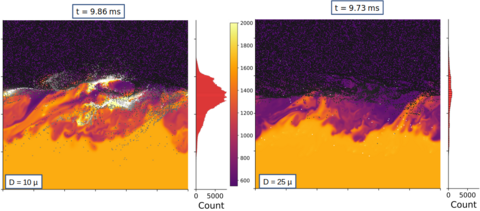
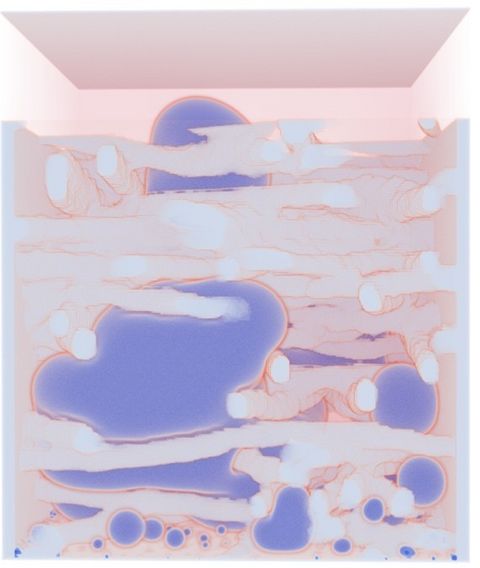
The formation and transport of gas bubbles are crucial in various electrolyzers, flow batteries, and catalytic reactors. Many of these applications employ porous materials, which serve as either catalyst supports or electrodes. Understanding the dynamics of bubble evolution and transport within these porous microstructures is key to optimizing the morphology of the porous materials and enhancing the overall efficiency of these devices. However, this understanding remains limited, largely due to the opacity and complexity of the microstructures, which make it difficult to observe and quantify bubble behavior in real-time.


Environment and Energy

Principal Investigator: Prof. Dr. Rubén D. Costa

HPC Platform used: SuperMUC-NG PH1-CPU and PH2-GPU at LRZ

Local Project ID: pn25bu

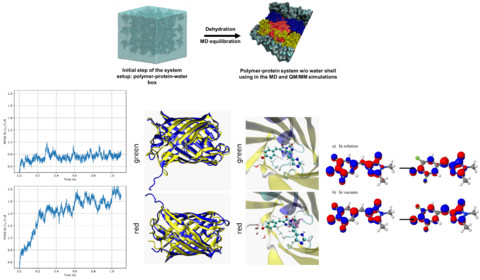
The EU promotes research in “Green Photonics,” aiming to develop efficient and eco-friendly technologies for energy, lighting, and electronics, aligned with the 2030 target of a 55% cut in greenhouse gas emissions. This drives the search for better illumination systems. White inorganic LEDs, candidates to replace incandescent bulbs and harmful fluorescents, rely on toxic and rare-earth materials, raising sustainability concerns. As an alternative, we propose the bio-hybrid LED (Bio-HLED), which uses fluorescent proteins embedded in polymers. BLOP (theoretically assisted Bio-hLed OPtimization) focused on characterizing its structure and understanding heat-induced degradation to improve stability and performance.

Materials Science and Chemistry

Principal Investigator: Dr. Thomas Brumme , Technische Universität Dresden, Germany

HPC Platform used: JUWELS Booster, GPU and CPU at JSC

Local Project ID: inhomostrain2d

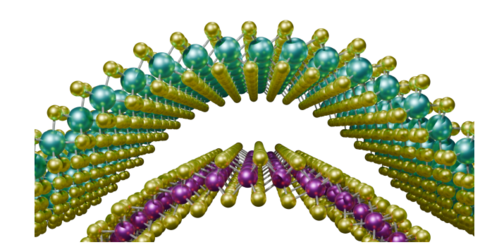
2D materials are one of the important material classes with potential to address problems with conventional semiconducting materials. They possess inherently a thin structure which can be used to manufacture even smaller electronic devices. Even if we know many different 2D materials, the ultimate use of them requires comprehensive knowledge about them and how one can expand their properties. Strain is a versatile tool to adjust 2D materials properties. It can be applied to many 2D materials intentionally, or it can be simply introduced during their synthesis. Understanding the influence of strain in this class provides important information for its employment in novel devices such as spin straintronics.

Elementary Particle Physics

Principal Investigator: Prof. Hartmut Wittig , Institute for Nuclear Physics, PRISMA+ Cluster of Excellence, Johannes Gutenberg University of Mainz, and Helmholtz Institute Mainz, Germany

HPC Platform used: JUWELS Cluster and JUWELS Booster at JSC

Local Project ID: Hintspec

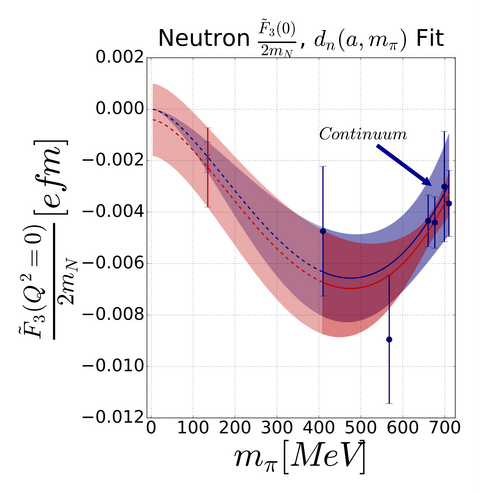
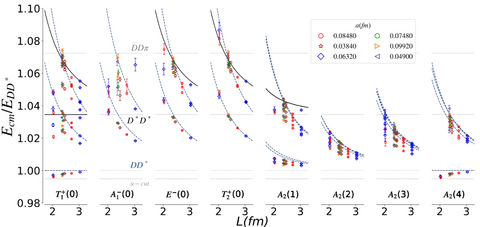
Quarks and gluons combine in many different ways to form states called hadrons. In recent years, experiments have uncovered exotic hadrons, which do not fit into traditional classifications. Hadrons can be studied using ab initio theory calculations called lattice quantum chromodynamics. In this project, investigations were performed of two different tetraquarks (four-quark systems) containing heavy ‘charm’ quarks.

Materials Science and Chemistry

Principal Investigator: Prof. Dr. Eva Pavarini , Forschungszentrum Jülich GmbH, Jülich, Germany

HPC Platform used: JUWELS CPU at JSC

Local Project ID: CTDMFTSO

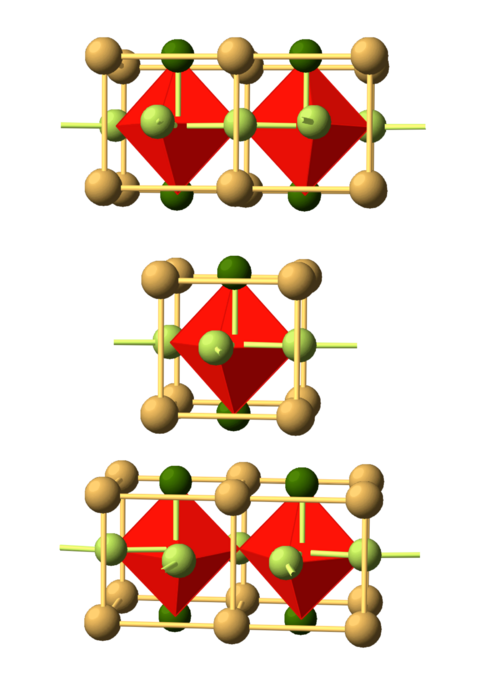
Materials are made of electrons (negative charges) and nuclei (positive charges). The hydrogen atom is the simplest case: one nucleus and one electron. The behavior of a single electron attracted by a positively charged nucleus is complex, but also well understood: it is the quantum-mechanical version of a planet rotating around the sun. Materials contain many electrons, however. When the number of electrons increases the behavior of a system can radically change. This is because electrons strongly interact with each other: they are all negative charges and thus they try to avoid one another. When electron-electron repulsion effects dominate their behavior, electrons lose their individuality, forming cooperative emergent states.…

Materials Science and Chemistry

Principal Investigator: Prof. Dr. Michael Moseler , Fraunhofer-Gesellschaft, Fraunhofer Institute for Mechanics of Materials (IWM)

HPC Platform used: JUWELS CPU at JSC

Local Project ID: harsh

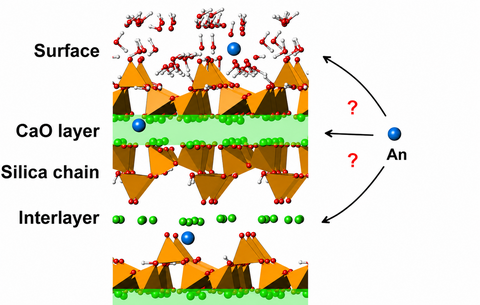
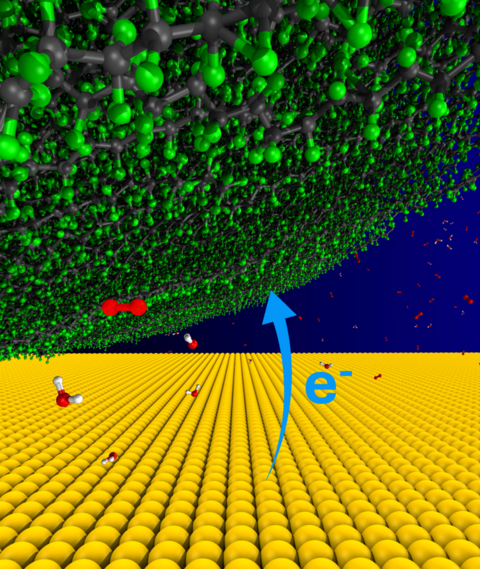
In this project, researchers from Fraunhofer IWM and the University of Freiburg explored how materials respond when exposed to harsh mechanical or chemical conditions altering the chemical structure close to the surface. This can lead to high friction and wear but also to unexpected effects or even to beneficial materials modifications. Applications range from machine tools, triboelectricity to functional materials for solar water splitting devices. Large scale quantum mechanical simulations revealed, among other findings, how to predict and understand friction under high pressure - where chemical bonds continuously break and reform - how to hydrogenate titanium dioxide (TiO2) efficiently at room temperature to enhance its functional…

Artificial Intelligence and Machine Learning
Principal Investigator: Dr. Frederic Effenberger , Ruhr-University Bochum, Germany

HPC Platform used: JUWELS BOOSTER at JSC

Local Project ID: SunGANBoost

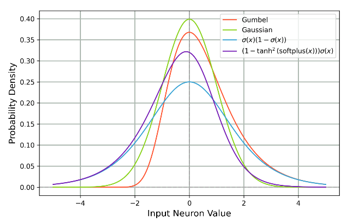
The SunGANBoost project developed advanced deep learning models capable of generating realistic synthetic solar images from multi-wavelength observations. By training large Generative Adversarial, Autoencoder and Diffusion models on data from NASA’s Solar Dynamics Observatory using the JUWELS Booster GPU supercomputer, the team achieved unprecedented fidelity in reproducing solar structures across wavelengths. The resulting models will support future solar physics research, helping scientists better understand and predict solar activity and its effects on space weather.

Life Sciences

Principal Investigator: Dr. Mercedes Alfonso-Prieto & Dr. Emiliano Ippoliti , Forschungszentrum Jülich GmbH, INM-9 Computational Biomedicine, Jülich, Germany

HPC Platform used: JUWELS at JSC

Local Project ID: fluc-gs

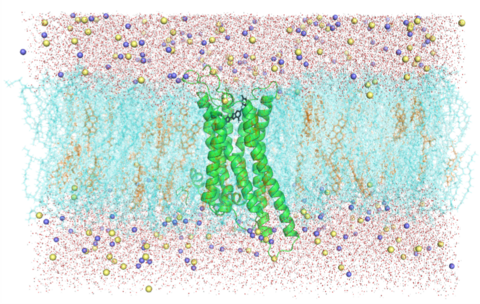
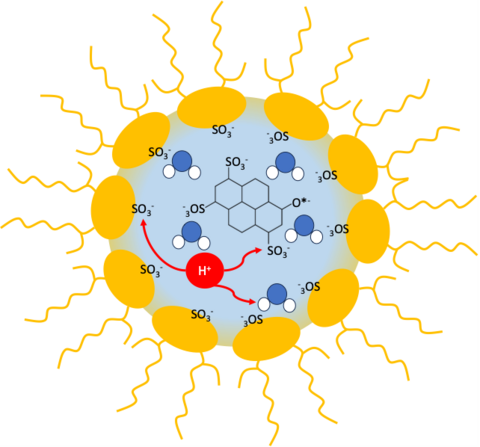
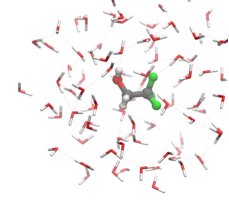
Researchers from Jülich and University of Milan Bicocca investigated how microorganisms protect themselves from the toxic effects of fluoride. They focused on a protein called Fluc, which creates a tunnel in the membrane to pump fluoride out from bacterial cells. One of the tunnel stations for fluoride contains a protein amino acid, glutamate, which can be negatively charged, as fluoride is. However, two close negative charges would repel each other and bring Fluc to a halt. Such jam could be resolved by either lifting the glutamate barrier out of the way or paying the toll of protonating the glutamate. Preliminary results from multiscale molecular dynamics simulations suggest that both options are feasible.

Elementary Particle Physics

Principal Investigator: Prof. Dr. Zheng Gong , Chinese Academy of Sciences, Institute of Theoretical Physics, Beijing, China

HPC Platform used: JUWELS CPU at JSC

Local Project ID: splpi

Researchers at the Institute of Theoretical Physics, Chinese Academy of Sciences, used the JUWELS supercomputer at Jülich Supercomputing Centre to explore how intense laser pulses interacting with plasma can produce spin-polarized particle beams. By performing large-scale particle-in-cell simulations that track both particle motion and spin dynamics, the project uncovered how magnetic fields, radiation effects, and plasma inhomogeneities shape spin polarization—insights that may guide future experiments and applications in high-energy physics and astrophysics.

Materials Science and Chemistry

Principal Investigator: Dr. Davide Mandelli , Forschungszentrum Jülich GmbH, INM-9 Institut für Neurowissenschaften und Medizin - Computational Biomedicine, Jülich, Germany

HPC Platform used: JUWELS CPU at JSC

Local Project ID: qmzinc

Zinc(II)-binding proteins play essential roles in biology, but their complex metal coordination is difficult to model accurately. Using an accurate Quantum Mechanics/Molecular Mechanics (QM/MM) molecular dynamics (MD) approach, this study explored the zinc(II) site of the Histone deacetylase protein, revealing detailed electronic and coordination dynamics. Leveraging our in-house MiMiC software on the JUWELS supercomputer, large-scale QM/MM MD simulations were performed efficiently providing insights into metal-ligand interactions that advance our understanding of metalloproteins.

Materials Science and Chemistry

Principal Investigator: Dr. Emiliano Ippoliti , Forschungszentrum Jülich GmbH, INM-9 Institut für Neurowissenschaften und Medizin - Computational Biomedicine, Jülich, Germany

HPC Platform used: JUWELS CPU at JSC

Local Project ID: idh1

This project uses quantum-powered computer simulations to improve how new drugs are discovered. Traditional simulation methods often fail for complex proteins, especially those with metals or chemical reactions. By combining quantum and classical physics in the newly developed MiMiC framework and running on the JUWELS supercomputer at Jülich, a new Quantum HPC Virtual Screening (QHPC–VS) method was developed. Applied to the mutant IDH1 enzyme linked to brain cancer, it identified 15 potential PET imaging tracers, offering new tools for faster, non-invasive diagnosis.

Materials Science and Chemistry

Principal Investigator: Prof. Dr. Walter Hofstetter , Goethe-Universität Frankfurt, Institut für Theoretische Physik, Germany

HPC Platform used: JUWELS CPU at JSC

Local Project ID: disorderedbosehubb

Within the project we numerically investigated the two-dimensional Bose-Hubbard model with local onsite disorder, where the competition between disorder and short-range interactions leads to the emergence of a Bose Glass (BG) phase between the Mott Insulator (MI) and superfluid (SF) phases [1]. To solve the inhomogeneous system, we employed real-space bosonic dynamical mean-field theory [2], which maps the complicated many-body problem to a collection of numerically solvable impurity models. Within our approach we always find an intermediate BG phase between the SF and MI. Analyzing the spectral function in the strong coupling regime reveals evidence for analytically predicted damped localized modes in the dispersion relation [5].

Elementary Particle Physics

Principal Investigator: Dr. Francesco Parisen Toldin , Institute for Theoretical Solid State Physics RWTH Aachen University, Aachen, Germany

HPC Platform used: JUWELS CPU at JSC

Local Project ID: critbdy

Critical phenomena occur at the onset of continuous phase transitions, where universality emerges: some observables are independent of the details of the local interactions, and are rather determined by global features, thereby defining universality classes. This project investigates critical phenomena in the presence of surfaces and defects, where rich phase diagrams are anticipated. It includes a quantitative study of the recently discovered extraordinary-log phase in the three-dimensional O(N) model, along with precise numerical estimates of universal coefficients for the three-dimensional Ising model with boundaries.

Astrophysics

Principal Investigator: Dr. Franco Vazza , Universität Hamburg, Hamburger Sternwarte, Hamburg, Germany

HPC Platform used: JUWELS CPU at JSC

Local Project ID: breakthru

Mega radio halos are Millions of light years extended and faint radio sources which illuminate the rarefied medium at the extreme periphery of clusters of galaxies, which have been discovered only in 2023 and whose origin is unknown.

Using high-resolution simulations performed on the JUWELS supercomputer, researchers from the University of Bologna might have for the first time modelled how such giant emission regions might form, based on the idea that the turbulence of present in between galaxies can give a fraction of its energy to electrons, making them moving at the speed of light and emit synchrotron radiation on scales never seen before.

Astrophysics

Principal Investigator: Prof. Dr. Stefanie Walch-Gassner , Universität zu Köln, I. Physikalisches Institut, Köln, Germany

HPC Platform used: JUWELS CPU at JSC

Local Project ID: dwarfgal

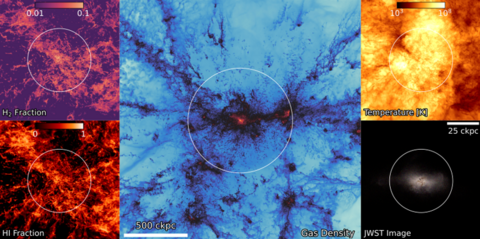
Dwarf galaxies are the smallest and most numerous galaxies, offering a clear view of fundamental astrophysical processes. Their shallow gravitational potentials make them highly sensitive to stellar feedback, helping us understand how feedback processes regulate star formation and the development of the multi-phase interstellar medium (ISM). They also preserve clues about early galaxy formation, chemical enrichment, and the nature of dark matter, serving as vital laboratories for testing cosmological models. In this project simulations of dwarf galaxies were performed to investigate the impact of stellar feedback and of the galactic environment including e.g. shearing motions on the ISM.

Life Sciences

Principal Investigator: Prof. Dr. Holger Gohlke , Heinrich-Heine-Universität Düsseldorf, Institut für Pharmazeutische und Medizinische Chemie, Germany

HPC Platform used: JUWELS BOOSTER at JSC

Local Project ID: metapro

Prof. Dr. Holger Gohlke and his team used the compute resources of the Jülich Supercomputing Centre to study the carboligase ApPDC and the transaminase Cv2025, enzymes of high industrial interest, as biocatalysts to produce fine chemicals to be used as agrochemicals or pharmaceutical compounds. The team performed extensive molecular dynamics simulations for enzyme variants in different solvents compositions and used Constraint Network Analysis (CNA) to simulate the thermal unfolding process of the enzymes in a rigid cluster decomposition.

Life Sciences

Principal Investigator: Prof. Dr. Holger Gohlke , Heinrich-Heine-Universität Düsseldorf, Institut für Pharmazeutische und Medizinische Chemie, Germany

HPC Platform used: JUWELS BOOSTER at JSC

Local Project ID: Lipases

Prof. Dr. Holger Gohlke, Pablo Cea Medina, and Alena Endres used the computing resources of the Jülich Supercomputing Centre to study the substrate specificity of esterases. Esterases are enzymes with multiple biotechnological applications, as they can degrade a wide variety of substrates. However, finding which esterase can degrade which substrates is hard, expensive, and time-consuming. Therefore, the team seeks to develop a rational understanding of how different esterases recognize their substrates, to effectively predict which esterase would be suitable for a given task.


Artificial Intelligence and Machine Learning
Principal Investigator: Dr. Andreas Lintermann, Dr. Marcel Aach , Forschungszentrum Jülich GmbH, Jülich Supercomputing Centre, Jülich, Germany

Local Project ID: genai-ad

Autonomous vehicles must predict the motion of other road users within fractions of a second in complex urban environments with hundreds of lanes, traffic lights, and vehicles. RedMotion addresses this challenge through a novel transformer architecture that learns augmentation-invariant and redundancy-reduced descriptors of road environments. By compressing up to 1,200 local environmental features into exactly 100 compact tokens through self-supervised learning, RedMotion achieves efficient and accurate motion prediction. Training on millions of traffic scenes from the Waymo and Argoverse datasets required extensive parallel computations on the GPU nodes of JUWELS Booster.

Life Sciences

Principal Investigator: Prof. Dr. Holger Gohlke , Heinrich-Heine-Universität Düsseldorf, Institut für Pharmazeutische und Medizinische Chemie, Düsseldorf, Germany

HPC Platform used: JUWELS BOOSTER module at JSC

Local Project ID: found

Deep learning is revolutionizing protein science, with graph neural networks (GNNs) and multimodal models enabling unprecedented insights into protein function and design. In this project, the team led by Prof. Dr. Holger Gohlke developed two complementary AI models: TopEC and OneProt. TopEC uses 3D GNNs to predict enzyme functions directly from protein structures, incorporating atomic distances and angles to achieve high accuracy across more than 800 enzyme classes. Its structure-aware approach outperforms traditional 2D methods and remains robust even when binding site information is uncertain. In parallel, OneProt extends the multimodal ImageBind framework to proteins, aligning structural, sequence, text, and binding data into a shared…

Life Sciences

Principal Investigator: Prof. Dr. Holger Gohlke , Heinrich-Heine-Universität Düsseldorf, Institut für Pharmazeutische und Medizinische Chemie, Düsseldorf, Germany

HPC Platform used: UWELS BOOSTER at JSC

Local Project ID: glr

Plants may not have brains, but they do have glutamate receptor–like proteins (GLRs) that behave much like the ion channels driving learning and memory in animals. These mysterious channels regulate key plant functions, from nitrogen use to pollen growth, yet how they control ion flow has remained unclear. To uncover their secrets, researchers led by Prof. Dr. Holger Gohlke combined high-precision modeling and molecular dynamics simulations of moss GLRs. Using AlphaFold2, they built accurate 3D channel structures and revealed how subtle changes in pore residues reshape ion permeability. The mutant channel showed enhanced calcium flow, linked to a more electronegative pore, an insight confirmed by large-scale simulations on supercomputers.…

For a complete list of projects run on GCS systems, go to top of page and select the scientific domain of interest in the right column.